UNEC Journal of Engineering and Applied Sciences Volume 5, No 2, pages 58-74 (2025) Cite this article,  1946 https://doi.org/10.61640/ujeas.2025.1205
Concrete is one of the most extensively used construction materials in the world due to its strength, durability, and cost-effectiveness. It plays a pivotal role in the development of both infrastructure and housing sectors, particularly in developing countries. However, the increasing demand for concrete has led to the rapid depletion of natural resources such as freshwater and river sand [1]. This growing concern has driven researchers to explore alternative and sustainable sources of raw materials that can be utilized in concrete production [2,3]. While many studies have focused on substituting cement with industrial by-products, fewer have investigated the potential of alternative water and fine aggregate sources. This highlights the need for further exploration of marine resources in concrete innovation.
In recent years, Self-Compacting Concrete (SCC) has emerged as a revolutionary material that can flow under its own weight without mechanical vibration, enabling easier placement and better surface finish [4]. SCC also helps reduce labour intensity, noise pollution, and construction time [5]. The development of SCC aligns with global efforts to enhance the efficiency and sustainability of construction practices. Various studies have validated the performance of SCC using conventional materials, particularly river sand and freshwater, which still remain the primary choices in mix design [6]. However, reliance on these conventional materials raises sustainability issues that this research aims to address.
The potential use of seawater in concrete has been a subject of debate due to concerns over corrosion and long-term durability. Earlier studies, such as by Mehta and Monteiro [7], highlighted the risks of chloride-induced reinforcement corrosion. However, recent findings suggest that for non-reinforced or low-risk structural elements, seawater can be safely used without compromising concrete integrity [8]. In addition, the chemical constituents of seawater may even enhance early-age strength due to the presence of chlorides and sulphates [9]. Despite these advantages, its use in SCC remains underexplored, particularly in combination with sea sand.
Sea sand is another marine-based material that has shown potential as an alternative fine aggregate. Studies have shown that sea sand can meet grading requirements for fine aggregates when properly washed to remove impurities and salts [10]. Xiao et al. [11] reported that sea sand can be effectively used in concrete mixtures without significantly affecting compressive strength. However, its use in SCC, which requires specific flow and segregation resistance properties, demands further investigation [12]. This presents a significant research opportunity to examine sea sand’s compatibility with SCC performance requirements.
In terms of fresh concrete properties, slump flow is a critical parameter in SCC that reflects its workability and ability to self-consolidate without segregation [13]. Studies by Okamura and Ouchi [14] established the benchmark for acceptable slump flow values, typically ranging from 650 to 800 mm. While several researchers have evaluated slump flow for SCC made with industrial waste or recycled aggregates [15], investigations involving marine aggregates and seawater are rare. Understanding how these alternative materials influence fresh properties is essential to ensure the practical application of SCC in real construction scenarios.
Mechanical performance remains the most crucial criterion in concrete evaluation. Previous research has indicated that SCC made with conventional materials can achieve compressive strengths of 35–60 MPa, depending on mix design and curing conditions [16]. For tensile and flexural strength, studies have shown that SCC tends to perform comparably or slightly lower than vibrated concrete, but still within structural safety margins [17]. However, there is limited data on how the combined use of seawater and sea sand affects compressive strength, indirect tensile strength, and flexural strengths in SCC mixes. This highlights a critical research gap.
Several standards and specifications govern mechanical testing in concrete, including SNI 1974:2011 for compressive strength, SNI 2491:2014 for indirect tensile strength, and SNI 03-4431-1997 for flexural strength. While these standards are widely adopted in Indonesian construction research, few studies have systematically applied them to SCC mixes using marine-based materials [18]. Moreover, the lack of region-specific data on marine material performance, particularly in the Indonesian coastal context, limits the development of relevant local guidelines. This research addresses that gap by producing empirical data based on national standards.
Environmental and logistical considerations also support the use of marine resources. In coastal and island regions where access to freshwater and river sand is limited, utilizing local materials such as seawater and sea sand can significantly reduce construction costs and environmental impact [19]. Prior studies in small island contexts have validated the logistical and economic feasibility of such approaches, though primarily on normal concrete [20]. Incorporating this strategy into SCC technology, which itself offers labour and efficiency benefits, remains a largely untapped area of research.
Some recent research has attempted to combine marine-based materials with SCC, but often only partially and without comprehensive performance evaluation [21]. For instance, studies may examine compressive strength alone without considering tensile or flexural behaviour, or omit analysis of fresh properties. A holistic evaluation is necessary to determine the structural viability of SCC mixes made with fully marine-based constituents. This research, therefore, aims to fill that gap by conducting a full suite of mechanical and fresh concrete tests on SCC using seawater and sea sand.
Based on the aforementioned discussion, this study aims to evaluate the performance of Self-Compacting Concrete incorporating seawater as mixing water and sea sand as fine aggregate through laboratory experiments. The investigation includes tests on slump flow, compressive strength, split tensile strength, and flexural strength, all conducted in accordance with relevant Indonesian National Standards (SNI). The findings are expected to provide empirical support for the sustainable use of marine materials in concrete production, particularly for construction in coastal and island regions. Ultimately, this research contributes to filling the knowledge gap in SCC performance with marine-based constituents and offers insights for more sustainable and context-adapted material use in the concrete industry.
This section describes the materials used and the experimental procedures conducted to evaluate the performance of Self-Compacting Concrete (SCC) incorporating seawater and sea sand as sustainable constituents. The research was carried out through laboratory testing focused on both fresh and hardened concrete properties. The materials used included Ordinary Portland Cement (OPC), sea sand as fine aggregate, coarse aggregate from crushed stone, and seawater as mixing water, all sourced from local coastal areas. The mix design followed standard SCC proportioning guidelines, and testing procedures were performed in accordance with Indonesian National Standards (SNI). The experimental program consisted of slump flow tests to evaluate workability, and compressive, split tensile, and flexural strength tests at 28 days to assess mechanical performance.
Properties of aggregate
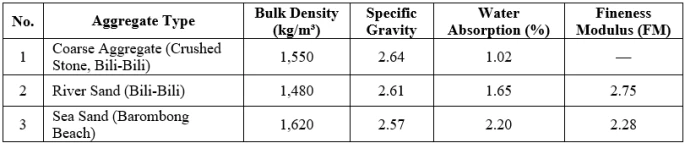
The aggregates used in this study were sourced locally from different regions in South Sulawesi, Indonesia. Coarse aggregate in the form of crushed river stone was obtained from the Bili-Bili River area, located in Parangloe Subdistrict, Gowa Regency. The fine aggregate used in the mixes consisted of river sand and sea sand. The river sand was also collected from the Bili-Bili area, ensuring compatibility in material characteristics with the coarse aggregate. Meanwhile, the sea sand was collected from Barombong Beach, located in Makassar City, South Sulawesi Province. Prior to use, all aggregates were subjected to laboratory testing to determine their physical and mechanical properties in accordance with relevant Indonesian standards. These tests are essential to ensure the suitability of the aggregates in producing Self-Compacting Concrete (SCC) with optimal workability and strength. The physical properties of both coarse and fine aggregates—including bulk density, specific gravity, water absorption, and fineness modulus—were determined through standardized procedures. A comparative analysis between river sand and sea sand is presented in table 1, highlighting their key characteristics relevant to SCC performance.
The results presented in table 1 show that sea sand has a slightly higher bulk density (1,620 kg/m³) compared to river sand (1,480 kg/m³), indicating that it is more compact due to the finer and more rounded particles typically found in marine environments. This characteristic can be advantageous in achieving higher packing density in SCC mixtures. However, this must be balanced with its other physical characteristics that may affect water demand and paste content.
In terms of specific gravity, both river and sea sands show values within a typical range for natural fine aggregates, though river sand has a slightly higher specific gravity (2.61) than sea sand (2.57). The lower specific gravity of sea sand may influence the overall density of the concrete and could result in a marginal reduction in mechanical strength if not properly accounted for in the mix design. In contrast, the higher water absorption of sea sand (2.20%) compared to river sand (1.65%) suggests that sea sand may demand more mixing water, potentially impact the water-cement ratio and workability of SCC if not properly compensate.
The fineness modulus (FM) is another important factor affecting the grading and packing of the fine aggregate. River sand recorded a FM of 2.75, which falls within the ideal range for concrete, while sea sand had a lower FM of 2.28, indicating a finer particle size distribution. This could enhance the cohesiveness of the SCC mix but might also increase the paste requirement to maintain flowability. The finer texture of sea sand may therefore benefit SCC workability, provided mix adjustments are made to mitigate its higher absorption and potential chloride content.
Portland composite cement
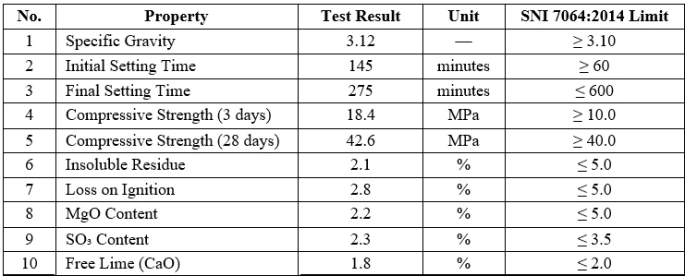
The cement used in this study was Portland Composite Cement (PCC) obtained from a certified local manufacturer in South Sulawesi Province, Indonesia. PCC is widely used in construction projects across the region due to its availability, cost-effectiveness, and environmental advantages. It is produced by blending Portland cement clinker with natural pozzolans, fly ash, or limestone, which improves its long-term durability and reduces CO₂ emissions during production. In accordance with SNI 7064:2014, the cement must meet specific physical and chemical criteria to ensure consistency and quality in concrete applications. Before use, the cement was tested in a laboratory to determine its compliance with standard specifications. The physical and chemical properties of the Portland Composite Cement used in this study are presented in table 2. The testing followed the procedures and requirements outlined in the Indonesian National Standard for PCC (SNI 7064:2014).
The test results show that the Portland Composite Cement used in this study satisfies all the physical and chemical requirements stated in SNI 7064:2014. With a specific gravity of 3.12, the cement meets the density range typically required to ensure appropriate strength development and compatibility with aggregate materials. Its initial setting time of 145 minutes and final setting time of 275 minutes indicate that the cement provides sufficient working time for mixing, transporting, and placing, which is especially beneficial for Self-Compacting Concrete (SCC) applications.
In terms of strength development, the compressive strength at 3 days was recorded at 18.4 MPa, while at 28 days it reached 42.6 MPa, exceeding the minimum requirement of 40 MPa. This demonstrates that the cement provides excellent early-age and long-term strength characteristics, supporting structural applications where strength performance is critical. These results also affirm its compatibility with alternative mixing materials like seawater and sea sand, which are central to this study.
The chemical properties such as insoluble residue (2.1%), loss on ignition (2.8%), and SO₃ content (2.3%) fall well within the specified limits, ensuring good chemical stability and minimal risk of adverse reactions. The free lime (1.8%) and MgO (2.2%) levels also comply with standards, reducing the possibility of delayed expansion or unsoundness in the concrete. Collectively, these results confirm that the PCC used is of high quality and suitable for blending with unconventional aggregates for sustainable SCC production.
Admixture
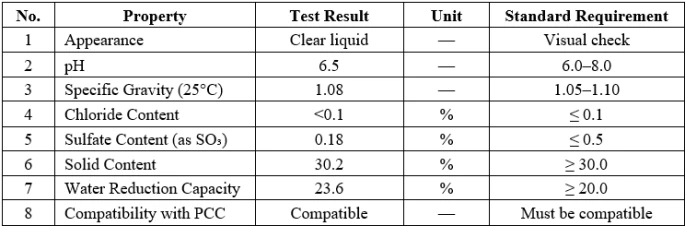
The chemical admixture used in this study is a superplasticizer based on polycarboxylate ether (PCE), obtained from a certified local supplier in South Sulawesi, Indonesia. This type of admixture is widely recognized for its high water-reducing capabilities and its ability to improve the flowability of concrete without increasing water content. The use of superplasticizer is especially crucial in Self-Compacting Concrete (SCC) to achieve the necessary workability and self-consolidating characteristics. PCE-based admixtures are favoured in modern concrete technology due to their compatibility with a wide range of cementitious materials, minimal setting time delay, and enhanced strength development. Prior to application, the admixture was tested in the laboratory to ensure it met the physical and performance criteria required for SCC applications. The physical and chemical characteristics of the superplasticizer were evaluated based on standard testing procedures and are presented in table 3 based on ASTM C494 / EN 934-2 guidance for high-range water-reducing admixtures. These properties are essential for ensuring optimal dispersion of cement particles and maintaining stable rheology in SCC mixtures.
The test results indicate that the superplasticizer admixture used in this study complies with standard requirements for high-performance concrete applications. The admixture exhibited a specific gravity of 1.08, which falls within the typical range for PCE-based superplasticizers and reflects an optimal concentration of active solid content. The solid content measured at 30.2% ensures sufficient dispersing efficiency, which is crucial for achieving homogeneity and minimizing segregation in SCC mixes. The pH value of 6.5 also confirms the admixture's stability and compatibility with cementitious systems.
In terms of performance, the admixture showed a water reduction capacity of 23.6%, which exceeds the minimum requirement for high-range water reducers. This characteristic enables the production of SCC with low water-cement ratios, thereby enhancing both early and long-term strength. Additionally, the admixture showed low levels of chloride (<0.1%) and sulphate (0.18%), indicating minimal risk of steel reinforcement corrosion and maintaining the durability of the concrete, particularly in aggressive environments such as coastal areas.
The admixture was confirmed to be compatible with Portland Composite Cement (PCC) used in this research, as no signs of segregation, bleeding, or abnormal setting were observed during the trial mixing phase. Its effective performance in combination with seawater and sea sand further supports its suitability in sustainable SCC applications. Overall, the use of this chemical admixture is critical in achieving the desired self-compacting properties while maintaining mechanical strength and durability of the concrete.
Seawater
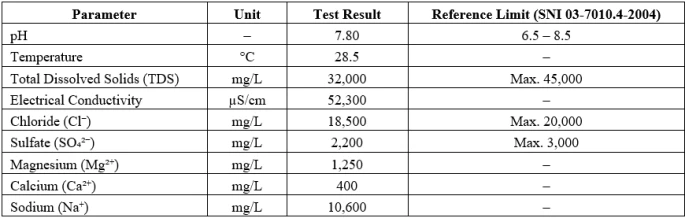
Seawater used in this study was collected from Barombong Beach, located in Makassar City, South Sulawesi Province, Indonesia. This coastal area represents a typical marine environment with moderate salinity levels and minimal industrial pollution, making it suitable for experimental evaluation of its applicability in concrete mixing. Prior to use, the seawater was stored in sealed containers and kept at room temperature to maintain its original chemical properties. The use of seawater in concrete has been explored in recent studies as a sustainable alternative to freshwater, particularly in coastal and remote areas with limited freshwater access. However, the presence of chloride, sulphate, and other dissolved ions necessitates careful evaluation of its effects on concrete properties and long-term durability. In this context, the seawater’s physical and chemical properties were analysed according to the Indonesian Standard SNI 03-7010.4-2004, and the results are presented in table 4.
The results indicate that the seawater collected from Barombong Beach falls within the acceptable range of chemical parameters set by SNI standards for limited use in concrete applications. The pH level of 7.80 suggests a near-neutral environment, which is generally suitable for mixing with cementitious materials without causing immediate setting disturbances. The temperature of the seawater during sampling was measured at 28.5°C, consistent with typical tropical coastal conditions, and does not pose any adverse effects during concrete hydration.
The Total Dissolved Solids (TDS) and electrical conductivity values reflect the natural salinity of the marine source, with TDS recorded at 32,000 mg/L. While these values are high compared to freshwater, they remain below the maximum threshold for permissible use in concrete as per the referenced SNI. The dominant presence of chloride (Cl⁻) ions at 18,500 mg/L is close to the upper limit and warrants attention due to potential long-term reinforcement corrosion risks if used in reinforced concrete applications. Therefore, the use of seawater should ideally be limited to non-reinforced or lightly reinforced concrete unless corrosion inhibitors or protective measures are applied.
Other significant ions present include sulphate (SO₄²⁻), magnesium (Mg²⁺), calcium (Ca²⁺), and sodium (Na⁺). These ions can influence the hydration process and potentially affect concrete durability depending on concentration and curing conditions. For instance, high sulphate levels may promote ettringite formation leading to expansion and cracking. However, in this case, the sulphate concentration is within safe limits. The results support the use of this seawater for experimental SCC production under controlled laboratory conditions, especially for the evaluation of early-age mechanical performance.
Research design
This research employed an experimental laboratory method to investigate the mechanical characteristics of Self-Compacting Concrete (SCC) incorporating seawater and sea sand as sustainable materials. The study was structured in a sequential approach, starting with a comprehensive literature review to identify key parameters, previous findings, and mix design recommendations relevant to SCC using alternative materials. This literature phase provided the conceptual and technical foundation for the subsequent experimental phase.
Following the literature review, the physical and chemical properties of all constituent materials—including Portland Composite Cement, coarse aggregate, river sand, sea sand, seawater, and chemical admixtures—were thoroughly examined through standard laboratory testing procedures. These test results served as the basis for determining an optimal SCC mix composition, ensuring the fresh and hardened concrete would meet target performance requirements. The mix design process focused on achieving suitable workability (slump flow range of 650–800 mm) while maintaining structural strength.
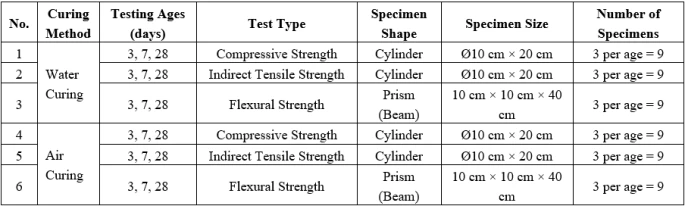
Once the SCC mix was established, specimens were prepared and subjected to mechanical strength testing at three different curing ages: 3 days, 7 days, and 28 days. The mechanical characteristics investigated in this study included: Compressive Strength, tested according to SNI 1974:2011; Indirect Tensile Strength, tested based on SNI 2491:2014 and Flexural Strength, tested according to SNI 03-4431-1997.
To evaluate the influence of curing conditions, specimens were divided into two curing regimes: water curing (immersion in fresh water) and air curing (ambient exposure). Each combination of curing method and testing age was applied to a minimum of three specimens per test, to ensure result consistency and statistical reliability. The collected data were then analysed to assess the effect of marine-based materials and curing methods on the development of SCC mechanical performance over time. Table 5 shows the testing scheme with specimen types.
Compressive strength
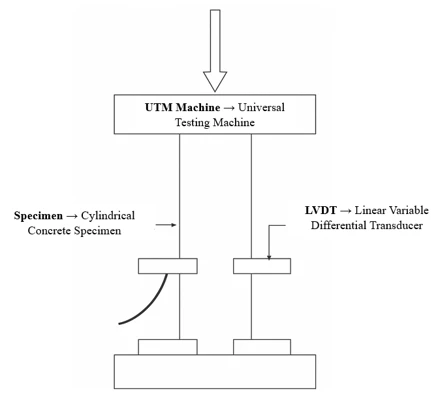
The compressive strength test was conducted on cylindrical specimens with dimensions of 10 cm in diameter and 20 cm in height, following the standard procedure outlined in SNI 1974:2011. The specimens were tested at ages 3, 7, and 28 days, under two curing conditions: water curing and air curing. Before testing, the specimens were removed from their respective curing environments, cleaned, and surface-dried. The compressive load was applied using a hydraulic compression testing machine at a uniform rate of loading until failure occurred. The maximum load sustained by the specimen was recorded, and the compressive strength (MPa) was calculated by dividing the failure load by the cross-sectional area of the specimen. This test was performed on three specimens per curing condition and age to ensure accuracy and reliability. The testing setup and procedure for compressive strength evaluation are illustrated in figure 1.
Indirect tensile strength
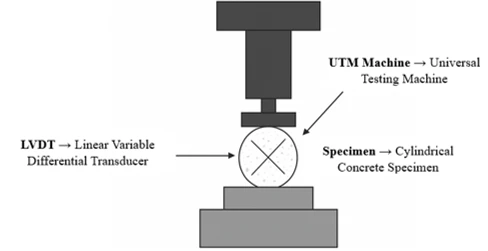
The indirect tensile strength test, also known as the split tensile test, was conducted on cylindrical concrete specimens with dimensions of 10 cm in diameter and 20 cm in height, in accordance with SNI 2491:2014. The specimen was placed horizontally between the platens of a Universal Testing Machine (UTM), and a compressive load was applied along its vertical diameter. This loading configuration induces tensile stresses perpendicular to the applied load, ultimately causing the specimen to split. A Linear Variable Differential Transformer (LVDT) was used to monitor the deformation during the test. The maximum load at failure was recorded and used to calculate the indirect tensile strength using the standard formula. Three specimens were tested for each curing method and testing age (3, 7, and 28 days) to ensure result consistency and statistical reliability. The testing setup and configuration for the indirect tensile strength test are illustrated in figure 2.
Flexural strength
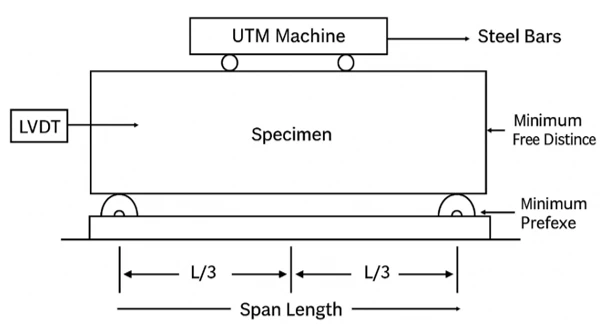
The flexural strength test was performed on prismatic concrete specimens measuring 10 cm × 10 cm × 40 cm, using the third-point loading method in accordance with SNI 03-4431-1997. The test was conducted with a Universal Testing Machine (UTM), where the specimen was simply supported at both ends and loaded at two points equally spaced from the supports. This loading configuration ensures the development of a constant moment region in the centre third of the span. The load was applied gradually until the specimen failed by cracking or breaking. A Linear Variable Differential Transformer (LVDT) was used to measure mid-span deflection throughout the loading process. The flexural strength (modulus of rupture) was calculated based on the maximum load and specimen dimensions. Each test was repeated on three specimens per curing condition (water and air) and per age (3, 7, and 28 days) to ensure result validity. The experimental setup for the flexural strength test is depicted in figure 3.
This section presents and discusses the experimental results obtained from the mechanical testing of Self-Compacting Concrete (SCC) incorporating seawater and sea sand as alternative constituents. The results include compressive strength, indirect tensile strength, flexural strength, and slump flow measurements at different curing ages (3, 7, and 28 days) under both water and air curing conditions. The performance of SCC mixtures is analysed and compared to understand the influence of marine-based materials on concrete behaviour. Data trends are interpreted in relation to material properties, curing methods, and age development. The findings are also evaluated by referencing prior research to identify consistencies or deviations, which further support the discussion of performance characteristics. This section also highlights the potential and limitations of utilizing seawater and sea sand in sustainable concrete production.
Mixtures design
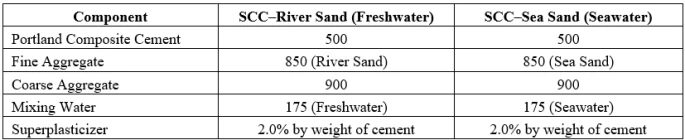
The mixture design for Self-Compacting Concrete (SCC) in this study was developed based on the results of material characterization and followed general SCC proportioning guidelines to achieve adequate flowability and mechanical performance. Two types of SCC mixtures were prepared to evaluate the influence of fine aggregate and mixing water variations: (1) SCC using river sand and freshwater, and (2) SCC using sea sand and seawater. The mix proportions were determined with a constant water-to-cement (w/c) ratio of 0.35 and a fixed dosage of superplasticizer to maintain self-compacting characteristics. Coarse aggregate, cement, and admixture contents were kept consistent across both mixtures to isolate the effects of fine aggregate and water source. The concrete was mixed using a pan mixer under controlled laboratory conditions, and batching was carried out by weight. The detailed composition of the SCC mixtures used in this study is shown in table 6.
The mixture design presented in table 6 reflects a comparative approach to evaluate the influence of different types of fine aggregate and mixing water on the performance of Self-Compacting Concrete (SCC). Both mixtures—SCC with river sand and freshwater, and SCC with sea sand and seawater—were proportioned with the same binder content, coarse aggregate volume, and water-to-cement ratio of 0.35 to ensure consistency and isolate the effect of the marine-based materials. The superplasticizer dosage was maintained at 2% by weight of cement in both mixes to achieve the required flowability characteristic of SCC. The substitution of river sand with sea sand, as well as freshwater with seawater, allows for direct assessment of the mechanical and workability properties of SCC under sustainable material scenarios. This design enables a focused analysis of the feasibility of utilizing locally available marine resources in concrete, particularly in coastal or island regions where conventional materials may be limited.
Slump Flow
The slump flow test is a primary method used to assess the flowability and filling ability of Self-Compacting Concrete (SCC) in its fresh state, as it must be able to flow under its own weight without segregation or the need for mechanical vibration. This test was performed according to the procedure outlined in EFNARC (2005) using a standard Abrams cone. The test was conducted on two SCC mixtures—one using river sand and freshwater, and the other using sea sand and seawater. Each specimen was measured for its slump flow diameter (in mm) and visual stability, and observations of the concrete’s appearance and spread characteristics were also recorded. The test provides important insight into the fresh performance of SCC containing marine-based materials. The summary of slump flow test results for both SCC mixtures is presented in table 7.
The slump flow results demonstrate that both SCC mixtures meet the general flowability range defined for SCC applications (typically 650–800 mm per EFNARC). The SCC made with river sand and freshwater showed a wider spread of 720 mm, with excellent visual cohesion, a stable circular flow pattern, and no signs of segregation or bleeding, indicating optimal fresh concrete properties. In contrast, the SCC mixture using sea sand and seawater exhibited a slightly reduced spread diameter of 690 mm, which remains within acceptable limits but was accompanied by minor segregation at the edges. This slight difference may be attributed to the angularity and finer grading of sea sand, which can slightly impede flow and reduce internal friction. Despite this, the flow was still considered adequate for self-compacting applications.
Visually, both mixes displayed good homogeneity, but the SCC-sea sand appeared less creamy and slightly drier around the perimeter of the spread area, possibly due to the higher salt content and surface texture of sea sand. These observations highlight the importance of proper proportioning and admixture compatibility when incorporating marine materials into SCC design. The performance in the fresh state confirms that seawater and sea sand can be used as sustainable substitutes, though slight adjustments may be required to optimize workability.
Compressive Strength
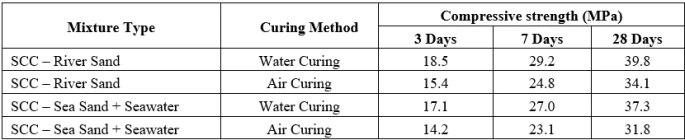
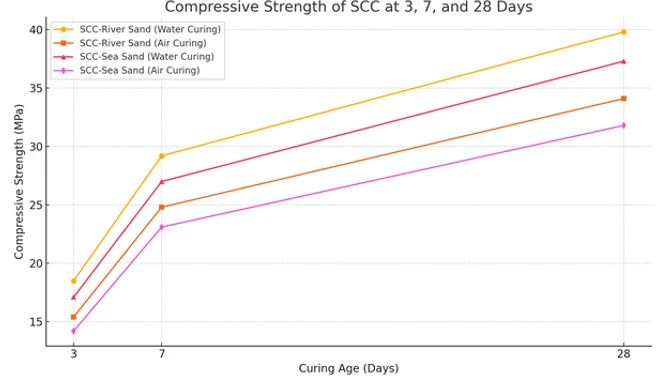
Compressive strength testing was carried out at curing ages of 3, 7, and 28 days for both SCC–River Sand and SCC–Sea Sand mixtures, under water curing and air curing conditions. The results are detailed in table 8 below. Figure 4 below shows the trend of compressive strength development for each mixture and curing condition.
The compressive strength results clearly show that water curing consistently yielded higher strength values than air curing for both SCC–River Sand and SCC–Sea Sand mixtures at all curing ages. This is consistent with previous research [22], which emphasizes that continuous hydration during water curing leads to more complete cementitious reactions, thereby improving the strength development of concrete.
When comparing the two aggregate types, SCC made with river sand exhibited slightly higher compressive strength than that made with sea sand across all ages and curing conditions. This can be attributed to the cleaner surface texture and lower salt content of river sand, which enhances the bond between the aggregate and the cement paste. Similar findings were reported by Sadeghi et al. [23], who observed a reduction in strength performance of marine sand due to salt contamination and finer particle grading. Despite this, the SCC–Sea Sand mixture still achieved satisfactory strength values, surpassing 30 MPa at 28 days even under air curing, which demonstrates its viability as a sustainable substitute for river sand, particularly in non-structural or low-load applications. Studies by Cao et al. [24] have also validated the feasibility of using sea sand in SCC applications, provided that appropriate mix design adjustments are made.
The strength gain pattern indicates typical hydration kinetics, with a rapid increase from day 3 to 7, and a more gradual gain from day 7 to 28. This behaviour aligns with conventional cement hydration models and confirms that early-age strength is significantly influenced by curing type, while long-term strength is more governed by overall mix quality. In summary, the use of seawater and sea sand slightly reduces compressive strength, particularly under air curing. However, when coupled with proper curing and mix design practices, the differences remain within acceptable structural tolerances. These findings support the potential for local marine resources to be integrated into sustainable concrete practices, especially in areas with limited access to freshwater and river sand.
Indirect Tensile Strength
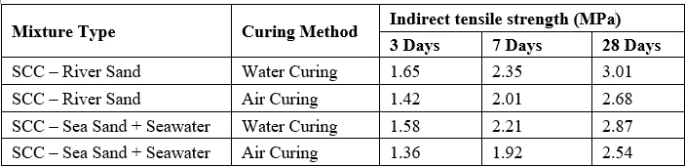
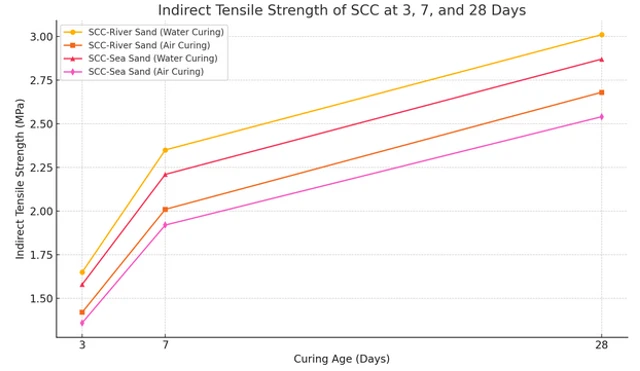
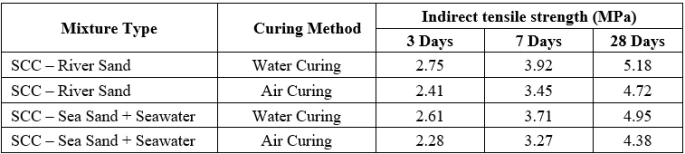
The results from table 9 and figure 5 indicate a clear trend: water curing consistently results in higher indirect tensile strength than air curing for all mixtures and ages. This pattern aligns with that observed in the compressive strength results, affirming that curing method is a significant factor influencing concrete’s tensile behaviour. The continuous moisture availability in water curing promotes cement hydration and microstructure densification, which enhances the matrix-aggregate bonding and tensile resistance.
Among all combinations, SCC using river sand and water curing achieved the highest tensile strength at all ages, peaking at 3.01 MPa on day 28. This can be attributed to the cleaner, rounder grains of river sand and the absence of saline interference, which allow for stronger paste-aggregate adhesion. Conversely, SCC with sea sand and seawater under air curing exhibited the lowest tensile values. The presence of chloride ions and finer particle grading in sea sand may introduce micro-cracking or weaker interfacial zones, especially when moisture availability is insufficient during air curing [25].
Interestingly, the difference in tensile strength between river sand and sea sand mixes is less pronounced than in compressive strength, suggesting that while marine materials slightly reduce tensile performance, the reduction is within acceptable limits for structural applications. This is consistent with previous findings by Sun et al. [26], which demonstrated that properly designed sea sand concrete can achieve satisfactory splitting tensile strength.
The ITS results also exhibit the expected trend of increasing strength with age. From day 3 to 28, strength nearly doubles in most cases, highlighting the importance of curing duration and condition. The parallel rise in compressive and tensile strength implies a strong correlation between these two mechanical properties. As noted by Resan et al. [27], the tensile strength of normal concrete typically ranges between 8–12% of its compressive strength. The values observed in this study fall within that range, confirming the consistency of the results. In conclusion, SCC with seawater and sea sand can still provide acceptable tensile strength performance if cured properly. Although slightly lower than conventional mixes, the results show promising potential for marine-based SCC, particularly in applications where sustainability and material availability are key considerations.
Flexural Strength
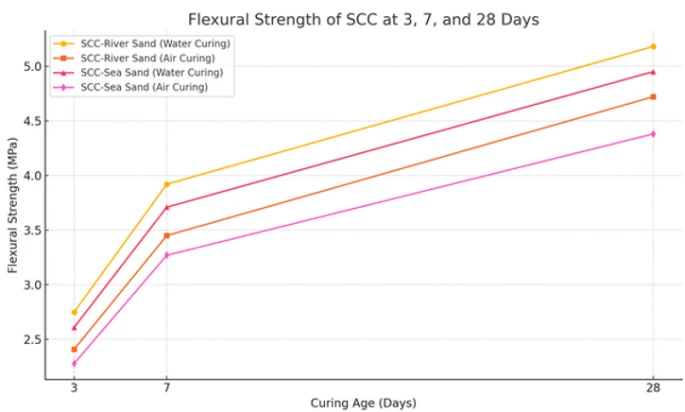
The results presented in table 10 and figure 6 clearly indicate that water curing enhances flexural strength across all SCC mixes. At 28 days, SCC with river sand and water curing achieved the highest flexural strength (5.18 MPa), followed closely by SCC with sea sand and seawater (4.95 MPa). These values reflect sufficient performance for structural applications, confirming that marine materials do not drastically impair flexural behaviour when proper curing is maintained. This outcome supports earlier studies by Leemann and Lura [28], who emphasized the importance of curing conditions in maintaining the modulus of rupture in SCC.
Comparing the performance between river sand and sea sand, it is evident that river sand consistently yields slightly better results, which can be attributed to its lower chloride content and better gradation. However, the strength difference is relatively small, indicating that sea sand, when combined with seawater, can still produce competitive flexural capacity. These findings align with the work of Arulmoly and Konthesingha [29], who observed marginal strength differences in marine-based concrete depending on salt retention and aggregate grading.
In terms of strength development, both mix types exhibited typical hydration trends where flexural strength increased significantly from day 3 to 28. This mirrors the behaviour observed in compressive and indirect tensile strength tests, suggesting that the development of the cement matrix and paste-aggregate bonding influences all three mechanical properties in a comparable manner. Strength gain was more pronounced in water-cured samples due to sustained hydration and delayed microcrack formation, a pattern well-documented in studies on SCC durability [30].
Interestingly, the ratios between flexural and compressive strength for each mix fall within normal limits (approx. 12–14%), confirming internal consistency. Similarly, the relationship between flexural and tensile strength remained stable, with the flexural values generally being higher, as expected. This consistency across mechanical indicators strengthens the reliability of using seawater and sea sand in SCC mixtures with appropriate design and curing protocols. In conclusion, the flexural performance of SCC incorporating sea sand and seawater is slightly lower than conventional river-based mixes but remains within acceptable structural standards. Combined with compressive and tensile strength findings, this demonstrates that marine materials offer viable, sustainable alternatives for producing SCC—particularly beneficial for coastal regions with limited access to freshwater and natural river sand.
Compressive-Indirect-Flexural Strength
The experimental investigation revealed a consistent pattern across all mechanical properties—compressive, indirect tensile, and flexural strength—demonstrating that the use of seawater and sea sand as concrete constituents can still produce structurally acceptable Self-Compacting Concrete (SCC), particularly under proper curing conditions. Water curing significantly enhanced strength development at all ages, indicating the critical role of moisture in facilitating cement hydration and reducing microstructural defects such as internal voids or microcracks.
In terms of compressive strength, SCC mixtures incorporating river sand performed slightly better than those using sea sand. This advantage is likely due to the cleaner particle surfaces and better grading of river sand, which enhances the bonding efficiency with the cement matrix. However, the performance of sea sand-based SCC, especially under water curing, remained within acceptable structural limits. By 28 days, the compressive strength of SCC using sea sand and seawater reached 37.3 MPa under water curing, compared to 39.8 MPa for river sand mixes—only a marginal reduction.
Similar trends were observed in the development of indirect tensile strength (ITS). The tensile strength values followed the same hierarchy as compressive strength, with river sand and water curing producing the highest values. At 28 days, SCC with river sand achieved 3.01 MPa in ITS under-water curing, while sea sand-based SCC reached 2.87 MPa. Although ITS values are lower due to the inherent brittleness of concrete in tension, they reflect a healthy bond between aggregate and paste, and the results conform to typical ratios (7–10%) of tensile to compressive strength in concrete materials.
Flexural strength, which reflects the concrete’s resistance to bending or cracking under flexural loading, also demonstrated parallel behaviour. At 28 days, river sand mixes achieved a maximum of 5.18 MPa, while sea sand mixes reached 4.95 MPa under water curing. The relatively small gap between the two indicates that the flexural performance of SCC is less sensitive to fine aggregate salinity and more influenced by proper curing and uniform dispersion of particles—characteristics naturally supported in the fluidic behaviour of SCC.
When all three properties are compared holistically, a strong correlation is evident among them. The strength gain pattern—rapid development between days 3 and 7, followed by a gradual increase until day 28—is consistent across all properties. This suggests that mix design and curing methods influence concrete behaviour systematically, not only in compression but also in tension and flexure. Therefore, optimization in one property is likely to benefit the others, given a balanced mix proportion and quality of materials.
The results also demonstrate the potential for local, marine-sourced materials to substitute conventional materials without significantly compromising performance. While minor reductions were observed, particularly in air-cured specimens, the findings affirm that these differences can be mitigated with adequate curing practices. This has substantial implications for sustainable construction, especially in coastal or island regions with limited access to freshwater and river sand.
In conclusion, the compressive, indirect tensile, and flexural strengths of SCC made with seawater and sea sand are slightly lower than traditional mixes but remain within structurally viable ranges. The mechanical performance consistency across all tested properties validates the feasibility of marine-based SCC as a sustainable construction material. These findings not only support broader use of alternative resources but also highlight the importance of curing and mix optimization in achieving high-performance, eco-efficient concrete.
The results clearly indicate that water curing significantly improves the mechanical properties of all SCC mixtures. Specimens cured in water consistently showed higher values for compressive strength, indirect tensile strength, and flexural strength compared to those cured in air. This demonstrates the importance of continuous moisture availability to support the hydration process and the development of internal strength. SCC mixtures made with river sand outperformed those made with sea sand across all test types and ages. However, the differences in performance were relatively small. Sea sand combined with seawater still produced acceptable strength levels, particularly under water curing, indicating that marine materials can be suitable alternatives when properly designed and cured. All strength parameters—compressive, indirect tensile, and flexural—followed a similar trend of strength gain from day 3 to 28. This consistency suggests that improvements in mix quality or curing conditions positively affect all aspects of mechanical performance. The proportional relationship among the three types of strength indicates a well-integrated concrete matrix and uniform material behaviour. Despite slightly lower results compared to conventional river-based mixes, SCC made with seawater and sea sand demonstrated reliable mechanical performance. These findings support the practical use of marine materials, particularly in coastal regions where freshwater and river sand are less accessible. When appropriate curing is ensured, marine-based SCC can meet standard structural requirements. The test results confirm that SCC mixtures using marine materials still meet the performance expectations for structural applications. The compressive, tensile, and flexural strength values achieved at 28 days fall within the acceptable range, providing confidence in the material’s load-bearing capacity and durability. These results validate the use of seawater and sea sand as viable and sustainable constituents in self-compacting concrete.
1 C. Kandou, M. Tumpu, D.R.G. Kabo, H. Tumengkol, Eng. Technol. Appl. Sci. Res. 15(2) (2025) 21482. https://doi.org/10.48084/etasr.10299
2 S. Lantang, M.F. Samawi, M. Tumpu, Eng. Technol. Appl. Sci. Res. 15(2) (2025) 22142. https://doi.org/10.48084/etasr.10270
3 Y. Sunarno, M. Tumpu, C. Kandou, D.R.G. Kabo, H. Tumengkol, P.R. Rangan, Eng. Technol. Appl. Sci. Res. 15(3) (2025) 23260. https://doi.org/10.48084/etasr.10451
4 B. Meko, J.O. Ighalo, O.M. Ofuyatan, Clean. Mater. 1 (2021) 100019. https://doi.org/10.1016/j.clema.2021.100019
5 G. Zhang, X. Sun, S. Zhong, Sci. Rep. 14 (2024) 6633. https://doi.org/10.1038/s41598-024-57138-3
6 T. Bouziani, M. Bédérina, Z. Makhloufi, M. Hadjoudja, J. Build. Mater. Struct. 1(1) (2014) 1. https://asjp.cerist.dz/en/article/9367
7 P.K. Mehta, P.J.M. Monteiro, Concrete: Microstructure, Properties and Materials, 3rd ed. McGraw-Hill: New York, USA (2006) 674p.
8 G. Scaravaglione, J.-P. Latham, J. Xiang, A. Francone, G.R. Tomasicchio, Coast. Offshore Sci. Eng. 2(1) (2022) 1. https://doi.org/10.53256/COSE_220105
9 S.I. Choi, J.K. Park, T.H. Han, J. Pae, J. Moon, M.O. Kim, Case Stud. Constr. Mater. 16 (2022) e01041. https://doi.org/10.1016/j.cscm.2022.e01041
10 K. Thunga, T. Venkat Das, Mater. Today Proc. 27(2) (2020) 1017. https://doi.org/10.1016/j.matpr.2020.01.356
11 J. Xiao, C. Qiang, A. Nanni, K. Zhang, Constr. Build. Mater. 155 (2017) 1101. https://doi.org/10.1016/j.conbuildmat.2017.08.130
12 H. Rasekh, A. Joshaghani, S. Jahandari, F. Aslani, M. Ghodrat, Self-Compacting Concrete: Materials, Properties and Applications (2020) 31. https://doi.org/10.1016/B978-0-12-817369-5.00002-7
13 A. Kanellopoulos, P. Savva, M.F. Petrou, I. Ioannou, S. Pantazopoulou, Constr. Build. Mater. 240 (2020) 117933. https://doi.org/10.1016/j.conbuildmat.2019.117933
14 H. Okamura, M. Ouchi, J. Adv. Concr. Technol. 1(1) (2003) 5. https://doi.org/10.3151/jact.1.5
15 A. Cwirzen, Self-Compacting Concrete: Materials, Properties and Applications (2020) 249. https://doi.org/10.1016/B978-0-12-817369-5.00010-6
16 E. Gheidan, M.A. Ab. Kadir, O.G. Aluko, J. Struct. Fire Eng. 16(2) (2025) 268. https://doi.org/10.1108/JSFE-08-2024-0031
17 17. D. Rizos, J.M. Caicedo, F. Barrios, R.B. Howard, A.S. Colmorgan, P.H. Ziehl, Investigation of the performance and benefits of lightweight SCC prestressed concrete bridge girders and SCC Materials (2009) 274p. https://rosap.ntl.bts.gov/view/dot/38922/dot_38922_DS1.pdf.
18 L.Li, Sustainability 15(8) (2023) 6757. https://doi.org/10.3390/su15086757
19 T. Dhondy, A. Remennikov, M.N. Shiekh, Aust. J. Struct. Eng. 20(4) (2019) 280. https://doi.org/10.1080/13287982.2019.1659213
20 G. Liu, J. Hua, N. Wang, W. Deng, X. Xue, Adv. Civ. Eng. (2022) Article ID 7329408. https://doi.org/10.1155/2022/7329408
21 D. Mantzavinos, Durability studies relevant to marine equipment, Vol. I. PhD Thesis, Department of Mechanical Engineering, University of Glasgow, Glasgow, UK. ProQuest Dissertations & Theses Global, Publication No. 10662765 (2021). https://doi.org/10.5525/gla.thesis.73974
22 P. He, C. Shi, Z. Tu, C.S. Poon, J. Zhang, Cem. Concr. Compos. 72 (2016) 80. https://doi.org/10.1016/j.cemconcomp.2016.05.026
23 J. Sadeghi, A.R. Tolou Kian, M. Chopani, A. Khanmoradi, Constr. Build. Mater. 342(B) (2022) 127943. https://doi.org/10.1016/j.conbuildmat.2022.127943
24 Q. Cao, X. Li, Z. Wu, Structures 60 (2023) 105396. https://doi.org/10.1016/j.istruc.2023.105396
25 S. Wen, M. Cao, G. Liu, J. Build. Eng. 90 (2024) 109404. https://doi.org/10.1016/j.jobe.2024.109404
26 L. Sun, Z. Yang, R. Qin, , et al., Sci. China Technol. Sci. 66 (2023) 378. https://doi.org/10.1007/s11431-022-2242-3
27 S.F. Resan, S.M. Chassib, S.K. Zemam, M.J. Madhi, Case Stud. Constr. Mater. 12 (2020) e00347. https://doi.org/10.1016/j.cscm.2020.e00347
28 A. Leemann, P. Lura, Mechanical Properties of Self-Compacting Concrete 14 (2014) 73. https://doi.org/10.1007/978-3-319-03245-0_3
29 B. Arulmoly, C. Konthesingha, Aust. J. Civ. Eng. 20(2) (2021) 272. https://doi.org/10.1080/14488353.2021.1971596
30 L. Amleh, L. Hussein, SSRN Electron. J. (2024) https://doi.org/10.2139/ssrn.5320440.
C. Kandou, M. Tumpu, H. Tumengkol, D.R.G. Kabo, Performance evaluation of Self-Compaction Concrete (SCC) using sea sand and seawater as sustainable constituents , UNEC J. Eng. Appl. Sci. 5(2) (2025) 58-74. https://doi.org/10.61640/ujeas.2025.1205
Anyone you share the following link with will be able to read this content:

This article is licensed under the Creative Commons Attribution ( CC BY 4.0 ) License, which permits unrestricted use, distribution, and reproduction in any medium, provided the original author and source are credited.
C. Kandou, M. Tumpu, D.R.G. Kabo, H. Tumengkol, Eng. Technol. Appl. Sci. Res. 15(2) (2025) 21482. https://doi.org/10.48084/etasr.10299
S. Lantang, M.F. Samawi, M. Tumpu, Eng. Technol. Appl. Sci. Res. 15(2) (2025) 22142. https://doi.org/10.48084/etasr.10270
Y. Sunarno, M. Tumpu, C. Kandou, D.R.G. Kabo, H. Tumengkol, P.R. Rangan, Eng. Technol. Appl. Sci. Res. 15(3) (2025) 23260. https://doi.org/10.48084/etasr.10451
B. Meko, J.O. Ighalo, O.M. Ofuyatan, Clean. Mater. 1 (2021) 100019. https://doi.org/10.1016/j.clema.2021.100019
G. Zhang, X. Sun, S. Zhong, Sci. Rep. 14 (2024) 6633. https://doi.org/10.1038/s41598-024-57138-3
T. Bouziani, M. Bédérina, Z. Makhloufi, M. Hadjoudja, J. Build. Mater. Struct. 1(1) (2014) 1. https://asjp.cerist.dz/en/article/9367
P.K. Mehta, P.J.M. Monteiro, Concrete: Microstructure, Properties and Materials, 3rd ed. McGraw-Hill: New York, USA (2006) 674p.
G. Scaravaglione, J.-P. Latham, J. Xiang, A. Francone, G.R. Tomasicchio, Coast. Offshore Sci. Eng. 2(1) (2022) 1. https://doi.org/10.53256/COSE_220105
S.I. Choi, J.K. Park, T.H. Han, J. Pae, J. Moon, M.O. Kim, Case Stud. Constr. Mater. 16 (2022) e01041. https://doi.org/10.1016/j.cscm.2022.e01041
K. Thunga, T. Venkat Das, Mater. Today Proc. 27(2) (2020) 1017. https://doi.org/10.1016/j.matpr.2020.01.356
J. Xiao, C. Qiang, A. Nanni, K. Zhang, Constr. Build. Mater. 155 (2017) 1101. https://doi.org/10.1016/j.conbuildmat.2017.08.130
H. Rasekh, A. Joshaghani, S. Jahandari, F. Aslani, M. Ghodrat, Self-Compacting Concrete: Materials, Properties and Applications (2020) 31. https://doi.org/10.1016/B978-0-12-817369-5.00002-7
A. Kanellopoulos, P. Savva, M.F. Petrou, I. Ioannou, S. Pantazopoulou, Constr. Build. Mater. 240 (2020) 117933. https://doi.org/10.1016/j.conbuildmat.2019.117933
H. Okamura, M. Ouchi, J. Adv. Concr. Technol. 1(1) (2003) 5. https://doi.org/10.3151/jact.1.5
A. Cwirzen, Self-Compacting Concrete: Materials, Properties and Applications (2020) 249. https://doi.org/10.1016/B978-0-12-817369-5.00010-6
E. Gheidan, M.A. Ab. Kadir, O.G. Aluko, J. Struct. Fire Eng. 16(2) (2025) 268. https://doi.org/10.1108/JSFE-08-2024-0031
17. D. Rizos, J.M. Caicedo, F. Barrios, R.B. Howard, A.S. Colmorgan, P.H. Ziehl, Investigation of the performance and benefits of lightweight SCC prestressed concrete bridge girders and SCC Materials (2009) 274p. https://rosap.ntl.bts.gov/view/dot/38922/dot_38922_DS1.pdf.
L.Li, Sustainability 15(8) (2023) 6757. https://doi.org/10.3390/su15086757
T. Dhondy, A. Remennikov, M.N. Shiekh, Aust. J. Struct. Eng. 20(4) (2019) 280. https://doi.org/10.1080/13287982.2019.1659213
G. Liu, J. Hua, N. Wang, W. Deng, X. Xue, Adv. Civ. Eng. (2022) Article ID 7329408. https://doi.org/10.1155/2022/7329408
D. Mantzavinos, Durability studies relevant to marine equipment, Vol. I. PhD Thesis, Department of Mechanical Engineering, University of Glasgow, Glasgow, UK. ProQuest Dissertations & Theses Global, Publication No. 10662765 (2021). https://doi.org/10.5525/gla.thesis.73974
P. He, C. Shi, Z. Tu, C.S. Poon, J. Zhang, Cem. Concr. Compos. 72 (2016) 80. https://doi.org/10.1016/j.cemconcomp.2016.05.026
J. Sadeghi, A.R. Tolou Kian, M. Chopani, A. Khanmoradi, Constr. Build. Mater. 342(B) (2022) 127943. https://doi.org/10.1016/j.conbuildmat.2022.127943
Q. Cao, X. Li, Z. Wu, Structures 60 (2023) 105396. https://doi.org/10.1016/j.istruc.2023.105396
S. Wen, M. Cao, G. Liu, J. Build. Eng. 90 (2024) 109404. https://doi.org/10.1016/j.jobe.2024.109404
L. Sun, Z. Yang, R. Qin, , et al., Sci. China Technol. Sci. 66 (2023) 378. https://doi.org/10.1007/s11431-022-2242-3
S.F. Resan, S.M. Chassib, S.K. Zemam, M.J. Madhi, Case Stud. Constr. Mater. 12 (2020) e00347. https://doi.org/10.1016/j.cscm.2020.e00347
A. Leemann, P. Lura, Mechanical Properties of Self-Compacting Concrete 14 (2014) 73. https://doi.org/10.1007/978-3-319-03245-0_3
B. Arulmoly, C. Konthesingha, Aust. J. Civ. Eng. 20(2) (2021) 272. https://doi.org/10.1080/14488353.2021.1971596
L. Amleh, L. Hussein, SSRN Electron. J. (2024) https://doi.org/10.2139/ssrn.5320440.
 UNEC Journal of Engineering and Applied Sciences